The Inevitable Return: Why Gold Reclaims the Throne
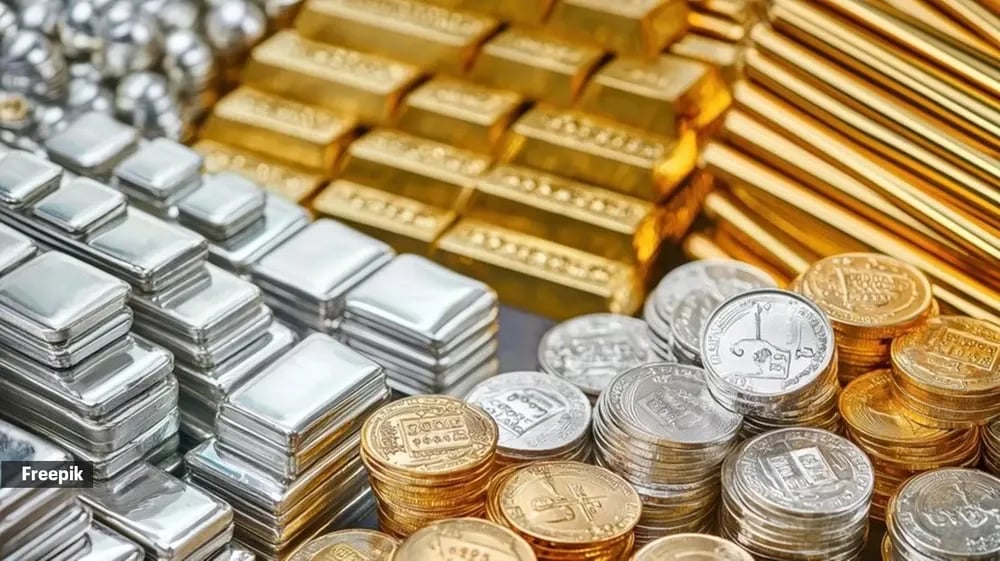
Dramatic cinematic scene of a golden throne rising amid dissolving fiat currencies, with silver rockets launching forward—symbolizing gold's monetary dominance and silver's explosive potential in the new reserve era.
We are living through the final chapters of a 50-year monetary experiment. Since 1971, the world has operated on a purely fiat standard—currency backed by nothing but faith and government decree. But if you look at the fundamentals—the real data, not the TV talking points—you’ll see the math is already broken.
The transition back to a hard asset standard isn't a conspiracy theory; it is a mathematical inevitability driven by debt, geopolitics, and physics. Here is the 20-year roadmap for Gold reclaiming its status as the global reserve asset, and why Silver is the asymmetric trade of the century.
The Core Fundamentals: Why Now?
Before we look at the timeline, we must understand the three pillars driving this shift.
The Debt Spiral (Fiscal Dominance): The US government now spends over $1 trillion annually just on interest payments. This is 19% of all federal revenue. When a nation borrows just to pay the interest on its credit card, the currency is mathematically doomed. The only way out is to print more currency to pay the debt, which debases the dollar further. In CBO’s current projections, debt held by the public reaches $49.6 trillion at the end of 2034. Raydalio Warning
BIS Basel III & Central Banks: Quietly, the rules of the game have changed. Under "Basel III" regulations, gold was reclassified as a Tier 1 Asset for banks—risk-free, just like cash. This gives commercial banks a massive incentive to hold physical gold instead of depreciating treasuries.
The BRICS Pivot: Major economies (China, Russia, India) are actively settling trade in non-dollar currencies. They are aggressively buying gold because they know their USD reserves can be sanctioned or inflated away. They are building a "neutral" trade settlement system, likely backed by gold.
The Timeline: The Return to Sound Money (2025–2045)
This transition won't happen overnight. It will be a process of "Gradually, then Suddenly."
Year 0-5: The Accumulation Phase (2025–2030)
The Trend: Aggressive "De-Dollarization Lite."
What Happens: Central banks continue buying gold at record rates (over 1,000 tonnes/year). The US dollar remains the primary currency for retail and swift, but loses its monopoly on energy trade (The "Petroyuan" rises).
Gold Price Driver: Fear. Investors realize inflation is sticky (4-5%) because the government must print to pay debt interest.
Key Milestone: A major non-western trading bloc (likely BRICS+) launches a gold-backed trade settlement unit (not a retail currency, but a backend clearing token).
Year 5-10: The Digital Standardization (2030–2035)
The Trend: Tokenization of Real World Assets (RWA).
What Happens: Gold becomes digitized. Instead of moving heavy bars, nations exchange "Gold Tokens" on a blockchain ledger that is audited in real-time. This solves gold's historical problem (portability).
Gold Price Driver: Utility. Gold is no longer just a shiny rock; it becomes high-velocity collateral for the digital banking system.
Key Milestone: The US Federal Reserve is forced to launch a CBDC (Central Bank Digital Currency) to compete, but without gold backing, it continues to lose value against the hard-asset backed competitors.
Year 10-15: The Crisis & The Reset (2035–2040)
The Trend: The "Sovereign Debt Crisis."
What Happens: US interest payments surpass Social Security and Medicare combined. The bond market revolts. No one wants to buy 30-year US Treasury bonds yielding 4% when real inflation is 10%.
The Pivot: To save the bond market, global powers convene for a "New Bretton Woods." They agree that to restore trust, currencies must have a "peg" to a neutral reserve asset. Gold is the only asset with the liquidity and history to serve this role.
Gold Price Driver: Revaluation. To back the trillions in outstanding paper currency, gold is revalued to a price that balances the balance sheet—potentially $10,000 - $20,000/oz in today’s purchasing power.
Year 15-20: The New Standard (2040–2045)
The Trend: Multi-Polar Reserve System.
What Happens: The US Dollar is no longer the sole reserve currency but one of several, all anchored by gold. Nations settle trade deficits in gold (or gold tokens).
Stability: This imposes fiscal discipline. Governments cannot print gold. If they spend too much, they lose their gold reserves. Inflation stabilizes, but the "free money" era of the 2010s-2020s is gone forever.
The "Double Squeeze" on Silver
In the next 5-10 years, Silver faces a crisis that Gold does not: Industrial Consumption.
Solar & EVs: Silver is the most conductive metal on earth. You cannot have a Green Energy transition without it. Solar demand alone is consuming ~20% of annual supply.
The Deficit: We are mining less silver, but demand is exploding. By 2030, we could see a permanent structural deficit where users (Apple, Tesla, Samsung) must bid directly against investors for available bars.
The Ratio Reversion
Historically, the Gold-to-Silver ratio (how many ounces of silver buy one ounce of gold) averages around 15:1 or 30:1.
Today: It is roughly 80:1. (Silver is historically cheap).
The Prediction: In a monetary reset (Year 10-15), gold flies first. But as gold becomes too expensive for the average person, the masses rush into silver ("Poor Man's Gold").
The Upside: If Gold hits $10,000 and the ratio returns to 30:1 (historical norm), Silver would be $333/oz. That is a 10x return from today, outperforming even gold.
Final Thoughts
The transition to a gold-anchored system is not a matter of "if," but "when." The math of compound interest on $35 trillion in debt makes the status quo impossible to maintain.